The bus did not say “festival.”
It simply read 大漁. A child’s backpack swung lightly as a father held his hand. An elderly woman stood patiently, a yellow auction cone tucked beneath her arm. No music played. No performances had begun.
And yet, everyone already knew — this was the Ishinomaki Taigyō Matsuri.
In this coastal city, the festival does not begin at the gate. It begins quietly in the streets, gathering people the way the tide gathers the sea.
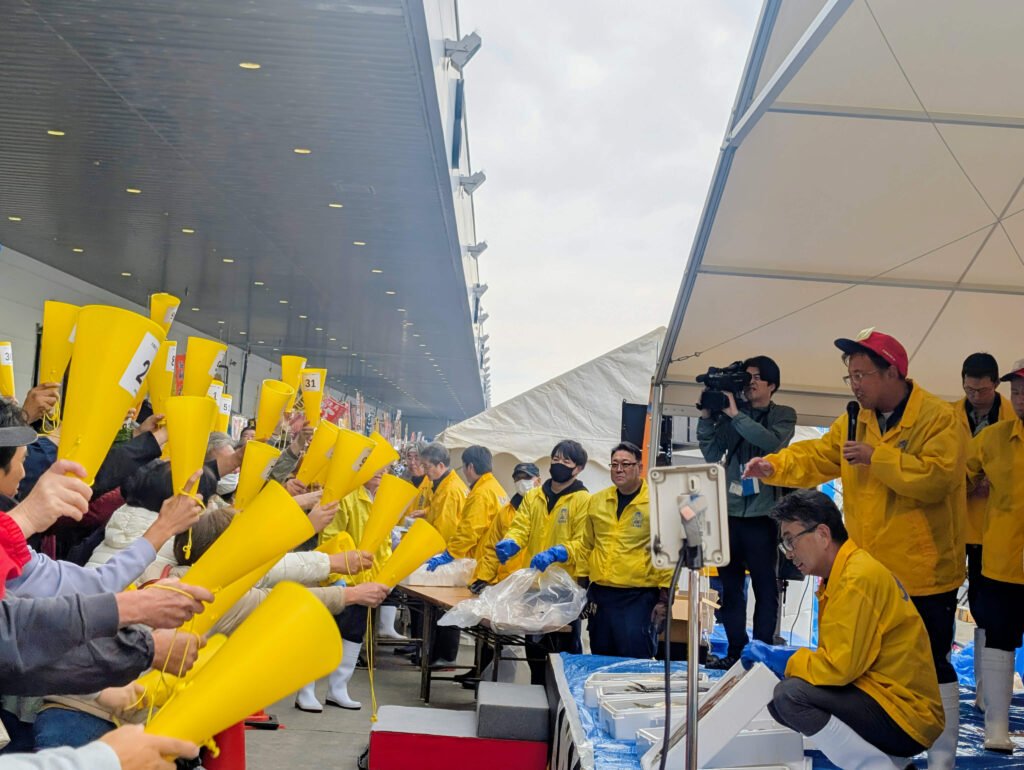
When the Yellow Cones Rise
The moment the yellow cones rise into the air, the atmosphere shifts. What was quiet becomes electric — but never noisy.
Buyers lean forward, hands steady, eyes fixed on the seafood laid out before them. The cones are not decorations; they are tools. Signals. A language understood instinctively by fishermen, wholesalers, chefs, and locals who have watched this ritual unfold year after year.
This is not a performance. It is a working system refined through generations — where movement, timing, and respect matter more than volume.