The Ishinomaki Taigyō Matsuri (石巻大漁まつり) is not a festival built for spectacle, but a living seafood market tradition rooted in the daily rhythm of Ishinomaki City. Rather than performances or loud celebrations, this quiet coastal gathering reflects how the sea feeds the city—through work, timing, trust, and shared understanding.
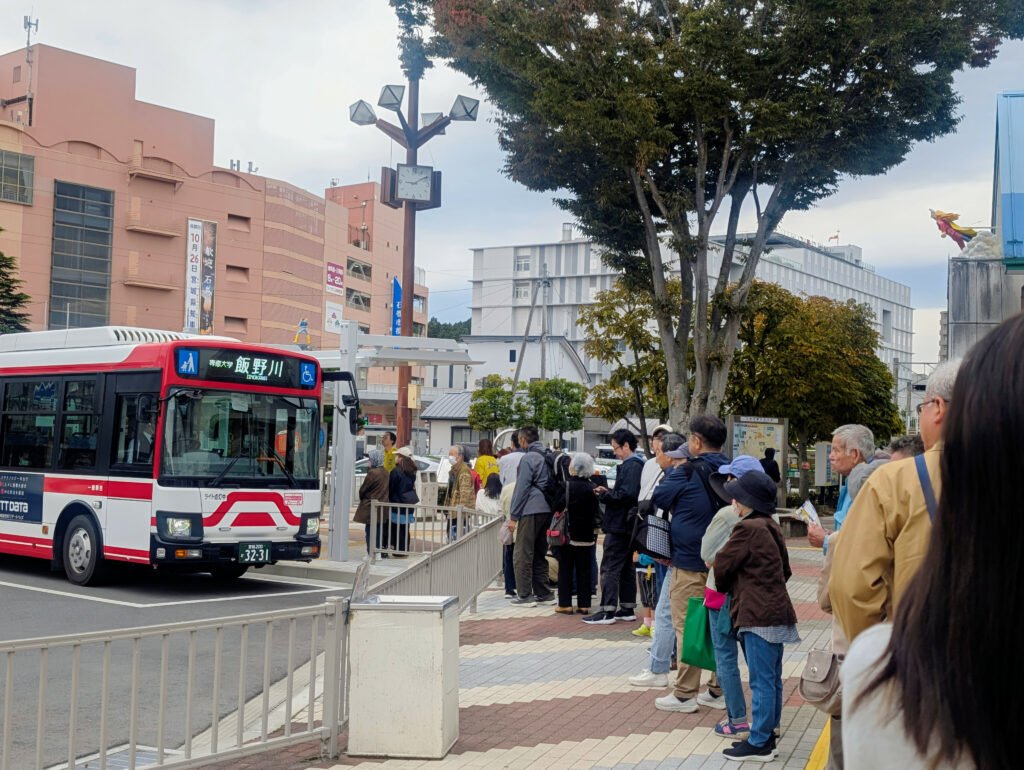
Instead of advertising a festival, the bus simply read 大漁 — “big catch.”
A child’s backpack swung lightly as a father held his hand. An elderly woman stood patiently, a yellow auction cone tucked under her arm. There was no music, no performance, and no signal to announce it. Yet everyone already knew—this was Ishinomaki Taigyō Matsuri.
In this coastal city, the festival does not begin at the gate. Instead, it moves quietly through the streets, gathering people the way the tide gathers the sea.
This quiet gathering marks the beginning of Ishinomaki Taigyō Matsuri—a living fish market tradition rooted in the daily rhythm of this coastal city.
When Does Ishinomaki Taigyō Matsuri Take Place?
The Ishinomaki Taigyō Matsuri is held every year in early autumn, most often in October, at the Ishinomaki Fish Market in Miyagi Prefecture.
However, the true beginning cannot be found on a timetable. Before any official announcement or opening call, people begin to arrive—families, elderly locals, and professional buyers—moving quietly toward the market, guided more by instinct than by schedule. In Ishinomaki, tradition does not wait for an announcement. Instead, it arrives the same way the sea does: steadily, patiently, and without asking permission.
The Meaning Behind “Taigyō” – 大漁 in Ishinomaki Taigyō Matsuri
“Taigyō (大漁)” means big catch, a word deeply embedded in the life of fishing towns across Japan.
Ishinomaki has long been one of Tōhoku’s most important fishing ports, supplying fresh seafood throughout the region. The Taigyō Matsuri began as a way to celebrate abundance, express gratitude to the sea, and bring the community together around the harvest that sustained them.
Even after the 2011 Great East Japan Earthquake and tsunami, Ishinomaki’s bond with the ocean endured—careful, respectful, and resilient.
Why Ishinomaki Taigyō Matsuri Is Different from Other Japanese Festivals?
Unlike many Japanese festivals shaped by performance and spectacle, Ishinomaki Taigyō Matsuri grows directly from work.
In Ishinomaki, people do not follow drums or parades. Instead, they move quietly toward the market, guided by routine, instinct, and years shaped by the sea.
Because of this, the festival never announces itself. Shared labor, practiced timing, and collective understanding allow it to unfold naturally.
Ultimately, Ishinomaki Taigyō Matsuri reminds visitors that not every festival needs a stage—some simply need people who belong to the place.
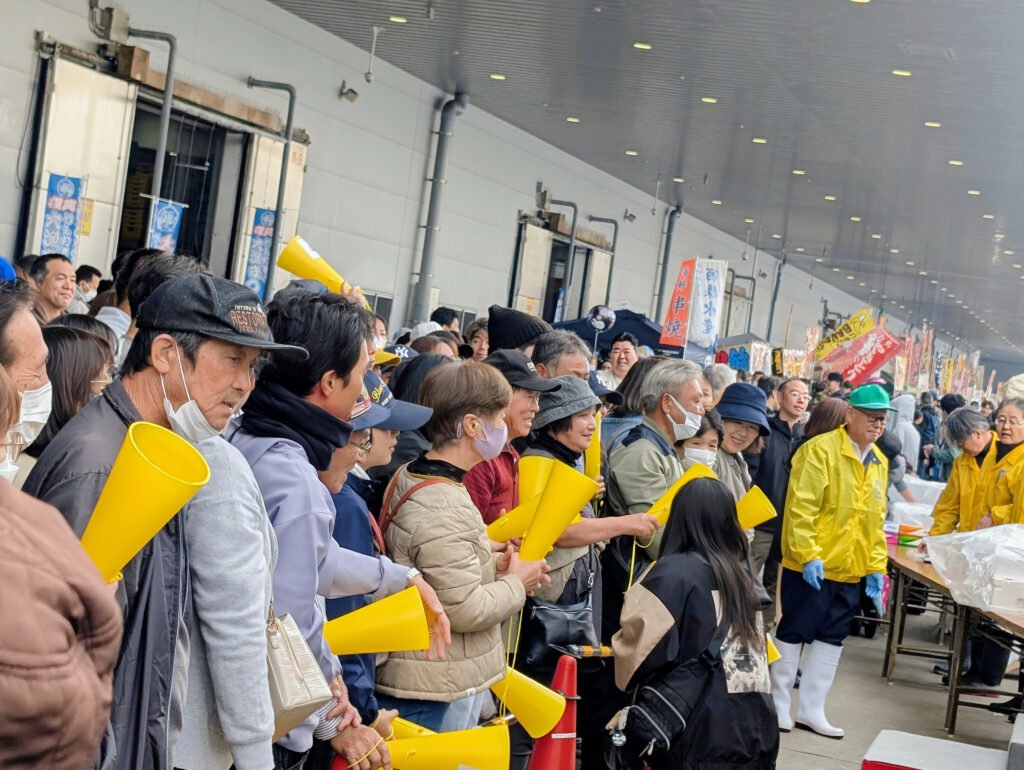
When the cones rise, the atmosphere tightens. Conversations stop. Gestures become precise. What looks chaotic to an outsider is, in truth, deeply organized—an unspoken language refined through decades of practice.
Each raised cone is not noise, but agreement.
What the Photos Are Really Showing
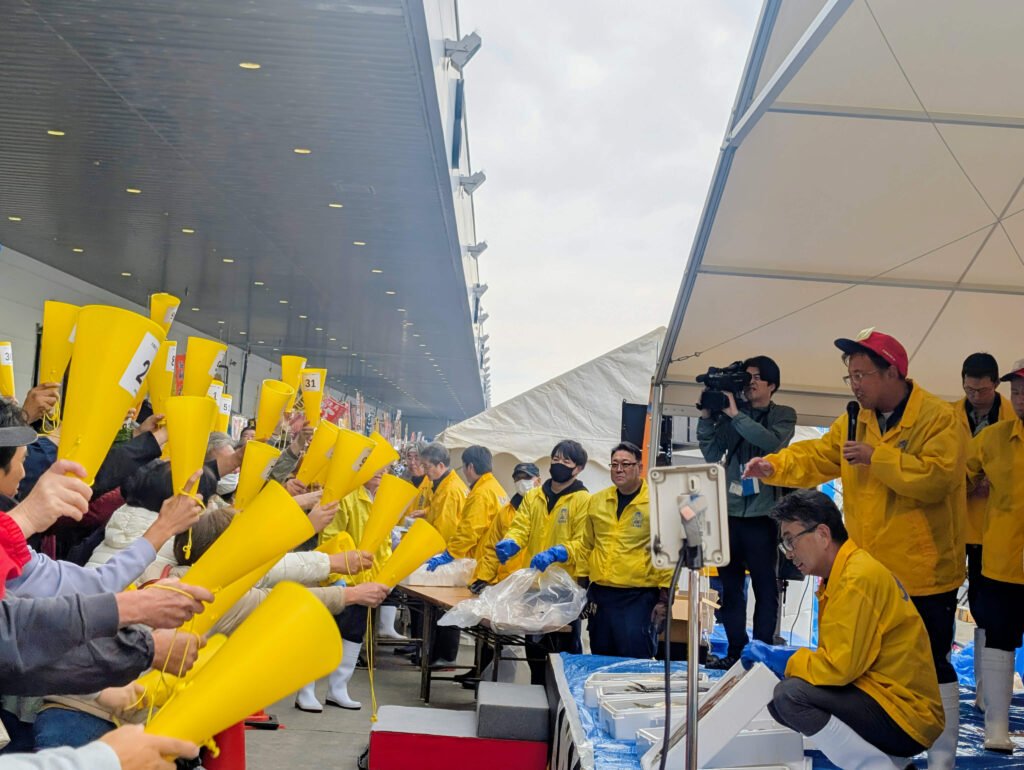
At first glance, the scene looks energetic. Arms raised, bodies packed close, movement everywhere. But beneath the motion is something quieter—a discipline shaped by experience.
When the yellow cones rise, the atmosphere changes. Conversations stop. The crowd tightens. What looks chaotic to an outsider reveals itself as deeply organized.
Each raised cone is not noise. It is agreement.
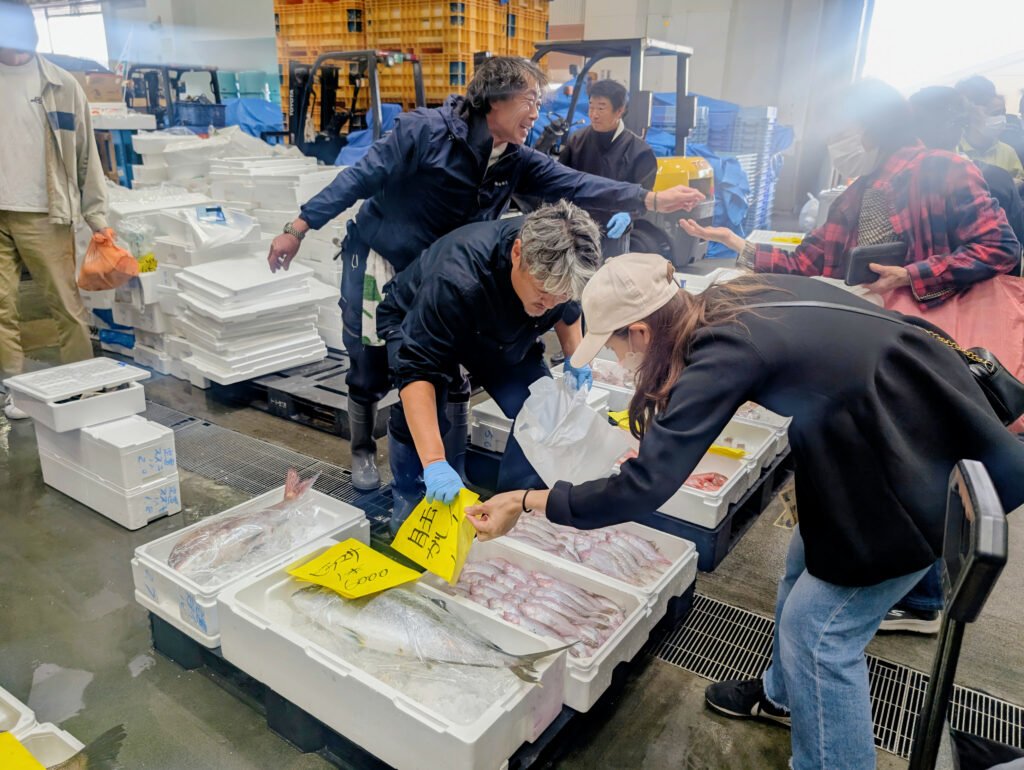
The bright yellow cones seen in the photos are auction markers, used in the seafood market. Each lift signals a bid—fast, precise, and wordless. This system allows auctions to move efficiently without shouting, without confusion, and without conflict.
In that moment, the mood shifts. Faces focus. Time slows.
The cones do not compete for attention. They coordinate it.
Yellow Cones Raised in the Air
The yellow cones seen in these photos are auction markers. Each raised cone signals a bid—fast, precise, and wordless.
They do not compete for attention. They coordinate it.
The moment the cones rise, the rhythm changes. Conversations stop. The crowd focuses. Time slows just enough for order to emerge.
The Auctioneers: Order Within Motion
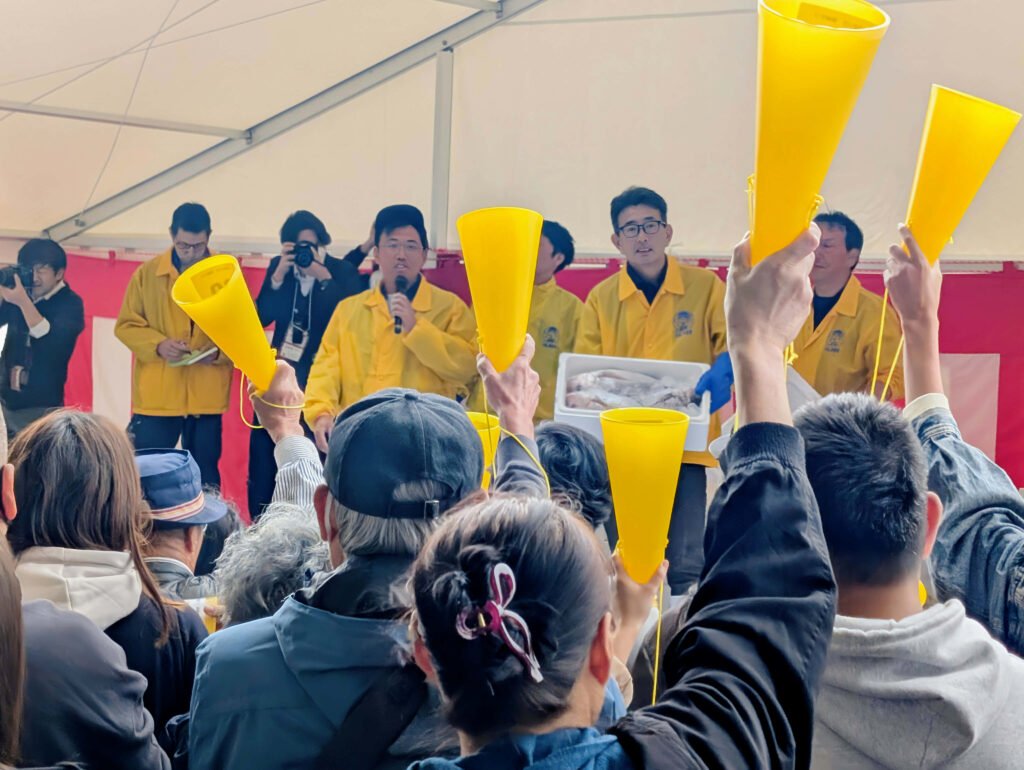
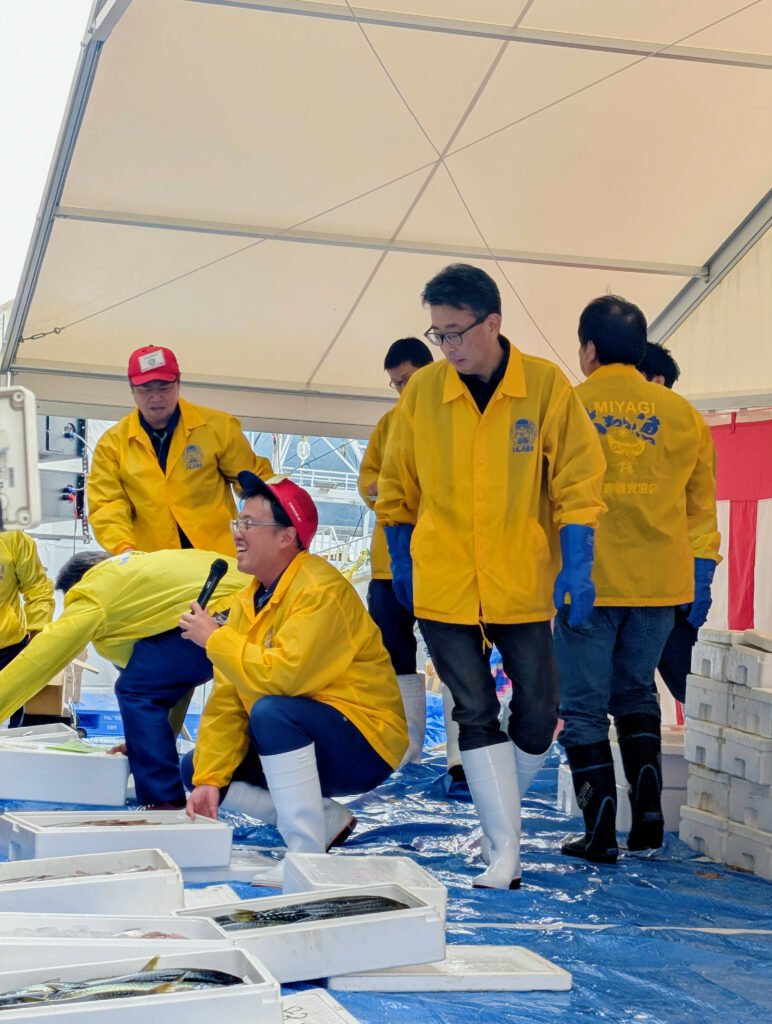
The men in yellow jackets are not performers. They are the keepers of rhythm.
One sets the pace, another tracks the catch, another confirms the winning bid. No gesture is wasted. No movement is rushed.
They learn this coordination through years of repetition.
Not a Festival for Show — a Working Ritual
This is not a festival built to impress outsiders. It exists because work must be done.
No fireworks. No staged performances. No decorations competing for attention. The work keeps the focus on hands, timing, and trust.
Here, celebration is found in movement— in seafood changing hands, livelihoods moving forward, and a tradition continuing without explanation.
A Personal Reflection
Standing quietly among the crowd, I found myself slowing down.
This was not a place for rushing or demanding attention.
No one needed to be impressed. No one was asked to be entertained.
The festival did not ask for applause. It asked for understanding.
Why You Should Visit Ishinomaki Taigyō Matsuri?
If you want to experience a festival where tradition is still lived—not performed—this is where you should come.
Here, locals do not gather as spectators, but move as part of a working rhythm. Work and celebration exist side by side, without needing to be separated.
Ishinomaki Taigyō Matsuri offers something increasingly rare: a moment where effort matters, silence speaks, and meaning is felt rather than explained.
This story is part of my Japan Lens project, where I document everyday life, local traditions, and quiet cultural moments across Japan through photography and storytelling.
If you’re planning to visit Ishinomaki to experience the Ishinomaki Taigyō Matsuri, I also share a comfortable place to stay—located near the city center and ideal for travelers who want to experience the town at a slower, more meaningful pace. I believe where you stay shapes how you experience a place, and this home offers a quiet base to explore Ishinomaki naturally.
Final Thoughts
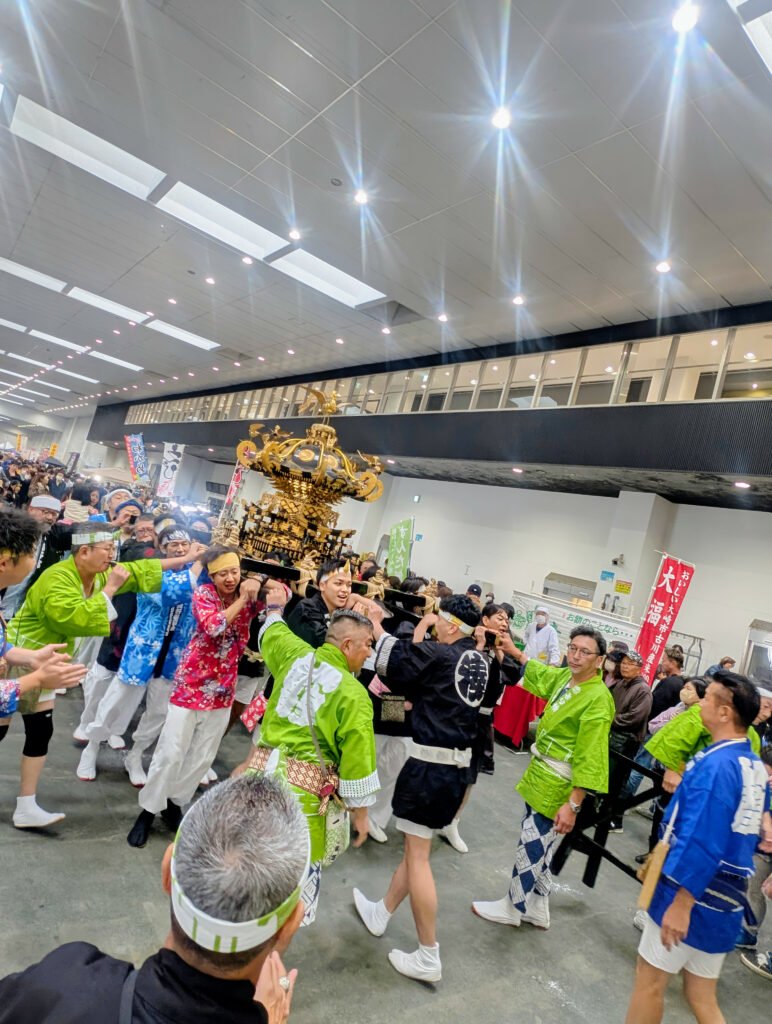
The Ishinomaki Taigyō Matsuri does not try to impress.
It continues—calm, confident, and grounded in respect for the sea and the work it sustains. It reminds us that the strongest traditions survive not because they are preserved, but because they are still lived.
In Ishinomaki, the sea does not simply surround the city. It feeds it. It shapes it. It moves through daily life with quiet purpose.
This is not a festival designed for attention. It is a tradition built on trust, patience, and work—carried forward without needing to announce itself.
Japan Lens
Stories seen, not staged.
Moments felt, not rushed.